Friday, 18 July 2014

The Sins of the Fathers (Matthew Scudder, #1)The Sins of the Fathers by Lawrence Block
My rating: 5 of 5 stars

In this short length debut of Matthew Scudder, prolific author Lawrence Block introduces a scene where Scudder is seen offering money to a police officer in exchange of information on a case Scudder is working. When the cop hesitates to take the money, Scudder deftly gives him a short but effective advice on why should he grab the money, and why him not taking the money might cause serious jeopardy to the his career. To that the cop replies that he guess he has a lot to learn. This scene told me first-hand that why Block is considered to be a class in crime writing, why Scudder stands apart from the pack of PIs working in the world of crime fiction, and lastly why a lot of “celebrated” crime writers has got a “lot to learn” from Block when it comes to crime writing.

My version of a perfect crime novel, this book incorporated everything that makes a particular book or a series successful. The book had pace, it had quality and when the ending came it was like coming down from a roller coaster ride which you have rode earlier but was equally enjoyable this time. As far as the plot goes, the whole concept was nothing new; in fact this same plot has been used over and over again. But, somehow Block turned this same old wine into something exotic by sheer speed, a hugely enjoyable and fascinating protagonist and by shedding any extra fact related to the plot, and presenting the whole book devoted to the crime and its solution. Not a single page was not somehow related to the plot. Not a single moment did it cross my mind to skip a page or a paragraph. Books like these never make into a top-100 lists or something like that, instead we get trash(disguised as highbrow crime fiction) listed in those lists.

And lastly, Matthew Scudder, a revelation. An ex-cop, who left the system after he got burnt in it. A PI without a license, a no-nonsense man with a streak of violence in him. A divorcee with two kids. The man could have just turned into another gloomy clichéd American PI. But, thanks to Block he doesn’t. How many protagonists do we have in this world of crime writing who tells a cop to accept money in return for information? Who tells a gay bar-owner to bribe the city police chief in order to make him raid his place and arrest the troublemakers, or drops two hundred dollars into church’s poor box? Not many, but Scudder does. This man along with Morse, Poirot and Millhone is sure to go to the top of my list of favourite protagonists.


View all my reviews

Wednesday, 16 July 2014

Irene (Verhœven, #1)Irene by Pierre Lemaitre
My rating: 3 of 5 stars

What were the publishers thinking when they published the second instalment in the trilogy before they decided to translate and publish the first??? They were thinking right in doing so. Why?? Will come to that. Before that a bit of the plot, where a serial killer is on a killing spree with mutilated victims strewn all around. He kills them, tortures them, and uses classic crime fiction novels as his point of reference on torture methods and settings. As far as the basic premise of his crime and modus operandi goes he is clichéd to the core, with violence and madness mixed with the usual serial killer antics. Camille gets involved in the case and for those who have read Alex, will know gets involves personally too.

Now the publishers thought right because Alex is a far better Crime novel than Irene. If seen from a purely Crime Fiction POV Alex offered a lot of newness, ranging from the plot, the victims modus operandi, the change in the identity of a character from being good to bad, and back to being good again, or the nastiness of the violence made all the more potent with the mental brutality mixed with it. Compared to that, Irene was brutal, but so is most of the Scandi novels, even the new Robert Galbraith novel is brutal. Brutality didn’t work for me in this book. They were horrifying but it failed to create the level of horror which would make me sit on the edge of the seat.

The plot too, was nothing new. A serial killer taking on the main protagonist in a cat and mouse game, trying to show who is the boss. Been there done that. The use of classic Crime novel as a point of reference though new but is not that ground-breaking. Yes, it does offer a comprehensive course on Crime fiction of sorts, but we have had serial killers referencing ancient Spanish inquisition methods to torture the victims to killers leaving classic rock albums in their victims’ tortured bodies. So, this proved to be “not so exciting” to me. As it was the case with the “TWIST” in the last pages. Somehow the book was so long and a bit slow that by the time the twist came it failed to twist me in any way.

So, when the publishers decided to publish the second book first they knew they were publishing the better of the two books. And indeed it was a success, and for the sole reason that I enjoyed Alex, did I decide to stick with Irene up to the end. Had it been the other way round maybe Irene would have been shelved as UNFINISHED. But, the end result is that Pierre Lemaitre is one hell of a writer. Maybe this was a first-book-blues but he got class, and whoever had read Alex will surely agree that though slow, Irene wasn’t a pushover novel, and that maybe the third book in the trilogy will surpass the first two.


View all my reviews

Tuesday, 8 July 2014

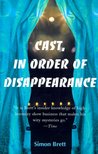
Cast, in Order of Disappearance (Charles Paris, #1)Cast, in Order of Disappearance by Simon Brett
My rating: 4 of 5 stars

Simon Brett is a prolific writers of whodunnits, with four series and more than 30 books to his credit. So, whenever I am toiling my way through an insanely slow and boring book which I decide to not to finish, I pick up one of his books, which instantly provides me with a sense of satisfaction, which I get from reading a good work of crime fiction.

Charles Paris, a mid 40s theater actor, the protagonist of this book is approached by an young girl, who wants him to be a bridge between an aging superstar and herself. She was besotted to him, even a few days back, but recently she got the boot from the old man. And now she is receiving threatening letters from the old man. So, as far as the plot goes there was nothing new to be found, but since I was not searching for anything new but something stable, I was more than happy with the pace and the line of the plot.

Like an economical medium pacer the book kept its line and length intact, and managed to survive without many down points or yawn moments. Yes, the pace was slow if compared to today’s style, but this was not a gory Scandi thriller, thereby breath-taking pace was never needed. The subtle humor, present in almost all Brett novels was very much present. But, the best part of it all was that the writer never made Paris to look like an official amateur detective. All along the plot he maintained a stance which showed clearly that he didn’t have any official authority to snoop, but did that just because somehow he got caught up in the whole mess.


View all my reviews

Tuesday, 24 June 2014

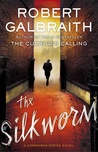
The Silkworm (Cormoran Strike, #2)The Silkworm by Robert Galbraith
My rating: 5 of 5 stars

When Val McDermid reviewed the first Robert Galbraith novel, she praised the book saying that it incorporated the best of the traditional mystery fiction and private-eye pace. The first one was good, but the second one was prone to get bogged by the 'Second Book Syndrome'. But once again proving Val McDermid’s opinion right, nothing as such happened, and the book proved to be fast and highly entertaining. Cormoran Strike, professionally busy and more famous after solving the Lula Landry case, gets a visit from a lady who wants her writer husband found. She needs him for the daily expenses, and also needs him for their daughter who is distraught without him.

The book was long. A bit too long for the kind of plot it featured, but thanks to the style of narration the process of reading it never seemed boring. Most long crime novels falls into the trap of over emphasizing the human psychology, the relations between the characters and other stuff which doesn’t help the plot a bit. Galbraith did incorporate these “human” layers in the book, like the relation between Robin and her fiancé Matthew, or the strange but enjoyable relation between her and Strike (wonder where that will go in the next book), but they never got out of hand, and came in the way of the plot. Every time I felt that maybe the conversation between the two characters is getting long enough, the writer presented me with a scene which bears a direct relation to the main plot. Page skipping was not an issue with this book. The plot, though nothing ground breaking was stable and the ending was done in a way that the crime doesn’t get solved through circumstantial evidence. The common plot and motive, and the length of the book could have made the whole thing boring, but the pace and non-deviation from the main plot turned it into a highly enjoyable piece of crime fiction. And the crime described was awesome. If the Nordic writers thought that they could be gory and brutal, then they do have a serious competitor here.

The characters were well drawn but again keeping in mind the nature of the book which is ultimately a crime novel, these developments were shown through their actions. They never made me yawn and ponder whether this book is a crime novel or a class in character development. Page long description of characters and chandeliers ala P.D. James style was never my cup of tea. The way they spoke, or the way they acted spelled out whether they are a bully or they are in awe of themselves. Even the description of the victim’s daughter was done through a series of dialogues and scenes where Strike and Robin tries to question her for clues. The description was potent enough to be heart-breaking.

The main point is, J.K. Rowling CAN WRITE. She has proved it over and over again. The Potter maniacs will vouch for that, the people who loved the process of filling up the casual vacancy would vouch for that, and now us crime fanatics would vouch for that too. So, there was never any doubt that these books featuring strike would be anything but good. Yes, I did have a sense of anxiety as to how she will handle the plotting, but with these two books she has really laid my fears to rest.


View all my reviews

Sunday, 22 June 2014

The Black Book (Inspector Rebus, #5)The Black Book by Ian Rankin
My rating: 3 of 5 stars

I had read my last Ian Rankin book a long time ago, and as far as I remember that one was a collection of short stories, which I didn’t particularly enjoy. And, if I stretch my mind even further back to the novel that I had read before that, I can hardly remember its name or what it was about. In short, Ian Rankin, though a celebrated author had never really put a solid mark on my reading life with his creations. I cant say I hate the books, but I don’t find them overtly enjoying, as was the case with THE BLACK BOOK, the fifth instalment in the John Rebus series.

The plot takes us to Edinburgh where a colleague of Rebus gets brutally assaulted outside a restaurant. Rebus takes up the cause and finds a black book belonging to the colleague which contains cryptic messages related to crimes mostly unsolved. The victim’s ex-partner suspects that the book and its contents are the reason for the assault. Rebus without the authority, takes it upon his own shoulders to find out the truth behind the book’s messages and solve some unsolved cases. Running parallel like a loop line is a case where Rebus is ordered to install surveillance on a crooked money lender and a butcher gets a visit from a stabbed relative and Rebus is given the case to solve. And like a true loop line these two lines comes and joins the main line at the very end thereby leaving no strings loose.

But, the novel didn’t match up to its blurb. The blurb suggested a high tension crime thriller with dark crimes and darker motives, but all I got was a slow moving mediocre book, which though not disappointing was never too enjoyable either. Rebus, not being my favourite protagonist, also didn’t help the cause. With his perpetual personal problems, and his issues with the senior officers the whole character gets stamped with a big label called “Cliched” and also another called “Its getting Boring”. The plot didn’t helped either. Filled with departmental politics, parallel sub plots and dangerous jumps in narrative between these plots, the book all the time felt like a chronicle of sorts from Rebus’ life, where in between all these personal issues he also managed to solve a crime. I love a book which contains a crime, detection and a solution, other side dishes in the form of personal issues and departmental politics never appealed to me.

Summing up, this book, like other Rankin novels I have read stayed true to the Rankin style, and in the process also managed to get the same response from me, which says, “Yeah, I did complete the book, but it took a lot of time, and I can’t say that I enjoyed it a lot.”


View all my reviews

Tuesday, 10 June 2014

The Body on the Beach (Fethering, #1)The Body on the Beach by Simon Brett
My rating: 3 of 5 stars

Simon Brett who won this year’s CWA Diamond Dagger for his contribution to the Crime writing genre is known for his mysteries which is surely defined as “Cozy mysteries” in todays standard, but would have been dubbed simply as “Mysteries” in the years gone by. Among his numerous series’ this one features two middle aged woman in the village of Fethering. Carole Seddon and Jude (just Jude) are neighbours. Carole being a woman with a stiff upper lip and Jude being the proverbial Happy-Go-Lucky. Carle discovers a dead body while taking her morning walk along the beach with her dog, Gulliver. As a dutiful citizen she calls up the police and reports the body, but the police arrives questions her only to inform her that they found no body on the scene. Following this event, Carole gets threatened by a woman with a gun, and another body, that of a child is discovered the next day. Carole confides in her neighbour, and together the two women starts digging within the upper-class Fethering society for the truth.

The book is almost entirely devoid of gore or bloodshed, which was pretty fine by me, as I don’t like useless gore and blood which has no need whatsoever for the plot to move further. But, what the book had in the true Golden age Crime fiction style was the pre3sence of a tight plot which propels the book forward. This being a straight forward crime novel, all reference to “psychology” and other deeper matters were not touched, which was again fine by me, and as a result we get to know very little about the characters including the protagonists, which suited the plot fine. And as it is a style of Simon Brett to keep his protagonists shrouded in somewhat mystery, this book was no different. Like Mrs Pargeter, one of his other protagonists, we hardly get to know much about Jude, not even her surname. She is shrouded in mystery but comes around as a woman who loves her life, and also brings in a sort of freshness to the somewhat boring life of her co-protagonist Carole Seddon, who unlike Jude is given a thorough background.

A definitely enjoyable read. Though a bit slow, but this book will be enjoyed by anybody who is looking for a light read between reading “HEAVY” novels.


View all my reviews

Monday, 2 June 2014

The Mermaids Singing (Tony Hill & Carol Jordan, #1)The Mermaids Singing by Val McDermid
My rating: 5 of 5 stars

I hate SERIAL KILLERs. I don’t like them. I can tolerate every kind of killers, but serial killers never sit well with me. Because when a novel is based on a serial killer and his/her antics the book develops a tendency of introducing a suspect in the last chapters and then promptly setting the clues right, and declaring that person as the culprit. Most of the serial killer novels follow this very unimaginative pattern, and most of these novels, since they involve the police, Private Investigators hardly gets the opportunity to feature in a serial killer hunt, gets crammed with uninteresting inter-departmental chatter and even more boring internal politics. Invariably the lead detective would be a broken man who would not shave and would not listen to his boss, and by a stroke of luck would uncover the criminal. I hate Serial killers and the novels which have them as antagonist.

Val McDermid with her book, THE MERMAID’s SINGING changed that, at least for once. This book had every reason for me to be a wary of it. It had long paragraphs, it had crime fighter duo of Tony Hill (male) and Carol Jordan (female) thereby running every risk of an on-the-job boring romance, and it had a serial killer. And the book was well praised, and well praised books more than often run the risk of being a let-down. The only bright side was the writer Val McDermid. She was known for her thrillers, which were extremely good, and though I had read only another book of her in an abridged version, but I had my faith in her. And she didn’t disappoint.

People with soft heart stay away from this book. This book is brutal and gory without being the obvious in-your-face kind of gory associated with the Nordic Crime fiction. Here the brutality is much more left to the imagination. Scenes are depicted where the culprit visits a museum dedicated to mediaeval torture, then the culprit kidnaps the victims, and then the mutilated bodies of the victims are discovered. The horror of the torture is left for the readers to imagine and squirm while doing so. Nothing more potent than this tact of making the reader gets the feel of the novel. And even the plot had the culprit from the very start, only in a way that the person is well concealed beneath the paperwork. And the police politics though present is mercifully short and never affects the pace of the book.

A definite must read for any crime fiction reader. This one though a bit slow is worth the every minute spent on it.


View all my reviews