Showing posts with label police procedurals. Show all posts

Saturday, 30 August 2014

Sidetracked (Wallander #5)Sidetracked by Henning Mankell
My rating: 3 of 5 stars

My first brush with Mankell and Wallander wasn’t as exciting as I would have liked it to, or as I was lead to believe it would be. There was nothing wrong with the book; neither was there anything out of the world, or special about the book. It was just another Scandi crime thriller with some gore, a serial killer and a dose of “broken” police officer with a family and some personal troubles. The book wasn’t a dud, but to compare with Morse is a bit too much.

The problem began with the plot. I have serious issues with serial killers as focal point of a crime novel. Serial killers tend to be erratic, and they kill without any apparent motive, which in turn turns the book into a lengthy process of catch the guy with no motive to spice thing up in the finishing chapters. Though this wasn’t the case here, not at least in toto, but somehow by the end of the book I did feel that Mankell forgot to provide the reader with a motive as to why the four guys got killed. Yes, the motive is simple and the reader can sum it up on his own, but I guess it’s the duty of the writer to elucidate on that point. Bottom line, the book got over but we never got a motive.

And lastly the translation. I know it’s hard to capture the essence of a book when it’s getting translated, but is it too hard to try and not make the book sound like robot? Because that’s how the book sounded to me. Wooden and bland dialogues. Mankell took the way, where he shows us the culprit, and then takes us through a cat and mouse game where both the cat and the mouse is known to us. The tact was good, it was filled with suspense but the wooden words killed off any kind of suspense that was meant to be present.

Summing up, this is not a dud, as I had said earlier. But, neither is this a piece of art.


View all my reviews

Friday, 1 August 2014

The Gone Dead Train: A MysteryThe Gone Dead Train: A Mystery by Lisa Turner
My rating: 3 of 5 stars

What happens when two bluesmen die under mysterious circumstances, an ex-ball player dies under violent circumstances and we have a duo of an cop(recently kicked by his former beau) and a “Polize-Goddess” (recently out of a violent illicit relationship) to solve the case? We get The Gone Dead Train by Lisa Turner. A decent sophomore effort that won’t make you sit up and take notice but which won’t make you yawn and roll your eyes either.

This book succeeds with mediocre but solid marks. Though being filled with clichéd moments involving blues music, voodoo, a cult called Santeria and downfall of an famous ball player, and clichéd characterisation in the protagonists of Memphis Detectives Billy Able, who comes out as a semi-renegade officer who pokes his nose into a case which is not his, and who is suffering from his girlfriend’s decision to open a bakery in Atlanta; and lady cop Frankie Malone who is eager to get promoted but fails to notice that getting into a relation with a married colleague might just prove to be a hurdle in her dreams.

With these the author decided to threw in some Memphis ambience, a civil rights lawyer and a deep connection with the civil rights movement, and the assassination of Dr. King. All these moments might have just turned sour, but the lady writing the book saved it. She with her style of writing kept the book fast and full of suspense. Apart from some loose ends regarding the deaths of the Bluesmen, and the modus operandi of the killer, the book was surprisingly fast. And because of this sole reason the book passes the test, as it scored on pace. And a thriller with good pace is always OK with me, even if it is garnished with a few loose ends.


View all my reviews

Wednesday, 16 July 2014

Irene (Verhœven, #1)Irene by Pierre Lemaitre
My rating: 3 of 5 stars

What were the publishers thinking when they published the second instalment in the trilogy before they decided to translate and publish the first??? They were thinking right in doing so. Why?? Will come to that. Before that a bit of the plot, where a serial killer is on a killing spree with mutilated victims strewn all around. He kills them, tortures them, and uses classic crime fiction novels as his point of reference on torture methods and settings. As far as the basic premise of his crime and modus operandi goes he is clichéd to the core, with violence and madness mixed with the usual serial killer antics. Camille gets involved in the case and for those who have read Alex, will know gets involves personally too.

Now the publishers thought right because Alex is a far better Crime novel than Irene. If seen from a purely Crime Fiction POV Alex offered a lot of newness, ranging from the plot, the victims modus operandi, the change in the identity of a character from being good to bad, and back to being good again, or the nastiness of the violence made all the more potent with the mental brutality mixed with it. Compared to that, Irene was brutal, but so is most of the Scandi novels, even the new Robert Galbraith novel is brutal. Brutality didn’t work for me in this book. They were horrifying but it failed to create the level of horror which would make me sit on the edge of the seat.

The plot too, was nothing new. A serial killer taking on the main protagonist in a cat and mouse game, trying to show who is the boss. Been there done that. The use of classic Crime novel as a point of reference though new but is not that ground-breaking. Yes, it does offer a comprehensive course on Crime fiction of sorts, but we have had serial killers referencing ancient Spanish inquisition methods to torture the victims to killers leaving classic rock albums in their victims’ tortured bodies. So, this proved to be “not so exciting” to me. As it was the case with the “TWIST” in the last pages. Somehow the book was so long and a bit slow that by the time the twist came it failed to twist me in any way.

So, when the publishers decided to publish the second book first they knew they were publishing the better of the two books. And indeed it was a success, and for the sole reason that I enjoyed Alex, did I decide to stick with Irene up to the end. Had it been the other way round maybe Irene would have been shelved as UNFINISHED. But, the end result is that Pierre Lemaitre is one hell of a writer. Maybe this was a first-book-blues but he got class, and whoever had read Alex will surely agree that though slow, Irene wasn’t a pushover novel, and that maybe the third book in the trilogy will surpass the first two.


View all my reviews

Sunday, 22 June 2014

The Black Book (Inspector Rebus, #5)The Black Book by Ian Rankin
My rating: 3 of 5 stars

I had read my last Ian Rankin book a long time ago, and as far as I remember that one was a collection of short stories, which I didn’t particularly enjoy. And, if I stretch my mind even further back to the novel that I had read before that, I can hardly remember its name or what it was about. In short, Ian Rankin, though a celebrated author had never really put a solid mark on my reading life with his creations. I cant say I hate the books, but I don’t find them overtly enjoying, as was the case with THE BLACK BOOK, the fifth instalment in the John Rebus series.

The plot takes us to Edinburgh where a colleague of Rebus gets brutally assaulted outside a restaurant. Rebus takes up the cause and finds a black book belonging to the colleague which contains cryptic messages related to crimes mostly unsolved. The victim’s ex-partner suspects that the book and its contents are the reason for the assault. Rebus without the authority, takes it upon his own shoulders to find out the truth behind the book’s messages and solve some unsolved cases. Running parallel like a loop line is a case where Rebus is ordered to install surveillance on a crooked money lender and a butcher gets a visit from a stabbed relative and Rebus is given the case to solve. And like a true loop line these two lines comes and joins the main line at the very end thereby leaving no strings loose.

But, the novel didn’t match up to its blurb. The blurb suggested a high tension crime thriller with dark crimes and darker motives, but all I got was a slow moving mediocre book, which though not disappointing was never too enjoyable either. Rebus, not being my favourite protagonist, also didn’t help the cause. With his perpetual personal problems, and his issues with the senior officers the whole character gets stamped with a big label called “Cliched” and also another called “Its getting Boring”. The plot didn’t helped either. Filled with departmental politics, parallel sub plots and dangerous jumps in narrative between these plots, the book all the time felt like a chronicle of sorts from Rebus’ life, where in between all these personal issues he also managed to solve a crime. I love a book which contains a crime, detection and a solution, other side dishes in the form of personal issues and departmental politics never appealed to me.

Summing up, this book, like other Rankin novels I have read stayed true to the Rankin style, and in the process also managed to get the same response from me, which says, “Yeah, I did complete the book, but it took a lot of time, and I can’t say that I enjoyed it a lot.”


View all my reviews

Monday, 2 June 2014

The Mermaids Singing (Tony Hill & Carol Jordan, #1)The Mermaids Singing by Val McDermid
My rating: 5 of 5 stars

I hate SERIAL KILLERs. I don’t like them. I can tolerate every kind of killers, but serial killers never sit well with me. Because when a novel is based on a serial killer and his/her antics the book develops a tendency of introducing a suspect in the last chapters and then promptly setting the clues right, and declaring that person as the culprit. Most of the serial killer novels follow this very unimaginative pattern, and most of these novels, since they involve the police, Private Investigators hardly gets the opportunity to feature in a serial killer hunt, gets crammed with uninteresting inter-departmental chatter and even more boring internal politics. Invariably the lead detective would be a broken man who would not shave and would not listen to his boss, and by a stroke of luck would uncover the criminal. I hate Serial killers and the novels which have them as antagonist.

Val McDermid with her book, THE MERMAID’s SINGING changed that, at least for once. This book had every reason for me to be a wary of it. It had long paragraphs, it had crime fighter duo of Tony Hill (male) and Carol Jordan (female) thereby running every risk of an on-the-job boring romance, and it had a serial killer. And the book was well praised, and well praised books more than often run the risk of being a let-down. The only bright side was the writer Val McDermid. She was known for her thrillers, which were extremely good, and though I had read only another book of her in an abridged version, but I had my faith in her. And she didn’t disappoint.

People with soft heart stay away from this book. This book is brutal and gory without being the obvious in-your-face kind of gory associated with the Nordic Crime fiction. Here the brutality is much more left to the imagination. Scenes are depicted where the culprit visits a museum dedicated to mediaeval torture, then the culprit kidnaps the victims, and then the mutilated bodies of the victims are discovered. The horror of the torture is left for the readers to imagine and squirm while doing so. Nothing more potent than this tact of making the reader gets the feel of the novel. And even the plot had the culprit from the very start, only in a way that the person is well concealed beneath the paperwork. And the police politics though present is mercifully short and never affects the pace of the book.

A definite must read for any crime fiction reader. This one though a bit slow is worth the every minute spent on it.


View all my reviews

Monday, 5 May 2014

Black Lies, Red Blood: A MysteryBlack Lies, Red Blood: A Mystery by Kjell Eriksson
My rating: 1 of 5 stars

Black Lies, Red Blood by Kjell Eriksson is the latest instalment in the series featuring Ann Lindell. Set is Sweden, the book starts with Lindell glowing in the light of new found love (according to her). But, no sooner had she really started feeling happy, than the “perfect man” Anders Brant, disappears from her life and apparently from Sweden without any hint as to his whereabouts or his motive. Before Lindell can figure what’s happening, a dead body with a bashed up head is found. Quickly identified as a homeless man, the police find a phone number in his pockets. And, giving credibility to the term “co-incidence” the number turns out to be Brant’s. Lindell is distressed and tries to solve another crime relating to the disappearance of a teenage girl, as she tries to find out “Where the hell, Brant is and what had he done to get his phone number in the pockets of a murdered man?”

Now, points to reckon while reading a book that has been written in a Scandinavian country.
1. Extremely brutal and twisted crime. Like one bullet used to kill three men standing haphazardly.
3. An equally twisted logic to solve and explain the crime.
4. Extremely bad translation (in most cases).
5. Extremely dark detectives.
a. They don’t know how to laugh.
b. Their lives are always down in the dumps.
c. They, always somehow in some way make the crime personal.
6. An African connection. (not frequent, but neither rare)
7. A book, despite all the above points, which is deliciously fast, and hugely entertaining to read.

Now, this particular book had none of the points mentioned from 1 to 6, except maybe the brooding detective and bad translation. Yet, it came out as a “WHY DID I PICK THIS BOOK” kind of book. The crime was pretty simple, the motive when explained to the reader was also simple, in fact it was so simple that wasting 320 pages on such a crime, and bringing it out with a name as mysterious and having no connection to the plot is a bit over the top. And the detection. This took all the cakes away. For 80% of the book everyone was speculating as to who can be the murderer, digging up names and taking with them, comparing fingerprints with no success. And then suddenly the murderer stars behaving oddly, he starts to show to the reader that he just might be the criminal, and in the penultimate chapter he is branded as the culprit. The police could have as well sat on their backs and waited for the 80% of the book to go by and wait for the man to reveal himself. This is not something I like in a detective novel. If this is a kind of thriller you are writing, I would rather read a case report. And coming to case report, the translation actually felt like that. Wooden and official.

Then what was this fuss about the book being an Ann Lindell mystery??? I mean the crime written on the blurb gets solved by everyone else but this lady. The only connection she had with the crime was that her supposed beau’s number was in the victim’s pocket, and that he did a vanishing trick. Lindell was busy trying to solve the missing kid case. And what did that case had to do with the main plot, except increase the number of pages?? And, even that case didnt get a proper ending. Or for that matter what did Anders Brant’s vacation in Brazil, his escapades with a Brazilian lady had to do with the main plot?? Except increasing the number of pages.

This book will remain as one, which had a thin plot fit for a short story, but which came out as a novel just because the author decided to stuff the whole plot with words and paras not remotely connected with the main plot. Or maybe this was that other kind of crime novel, the one with a “BROADER ISSUE” as it base. Whatever that might be!!


View all my reviews

Thursday, 1 May 2014

Bones and Silence (Dalziel & Pascoe, #11)Bones and Silence by Reginald Hill
My rating: 5 of 5 stars

BONES AND SILENCE by Reginald Hill is the eleventh book in the series featuring Andy Dalziel and Peter Pascoe. Dalziel starts receiving letters from a woman who has decided to commit suicide, and have also decided to let know the fat man of her decision through a series of letters. Dalziel then gets an offer to play God in a local play, as he witnesses a death of a woman. He is convinced that the husband is responsible for the crime, while all evidence along with his boss thinks it’s an accident. Things come to head when a crucial witness goes missing, as Dalziel realises that the main suspect is to play Lucifer to his God in the local play.

I normally tend to get bored by the type of crime novels where 10-15 odd pages gets filled with inter departmental chit-chat, the politics of the department, how the protagonist is trying to disobey his boss, and off course, his musical taste. These 15 pages are followed by a couple of pages of material related to the main plot, and then again the reader gets face to face with another 10-15 pages of the same stuff. All in the good name of “realistic” crime fiction.

Bones and Silence being a long book, had all the possibility of having all the above mentioned “real” points. But all it had was a tight plot, which meanders through a handful of clues. An ending which is not surprising, but still throws up a few delightful twists, and the great relation between Dalziel and Pascoe, which grows tighter with each passing book. In a way this was a complete crime novel, which justified its length.


View all my reviews

Sunday, 27 April 2014

The Tooth Tattoo (Peter Diamond, #13)The Tooth Tattoo by Peter Lovesey
My rating: 4 of 5 stars

THE TOOTH TATTOO by Peter Lovesey marks the return of Peter Diamond of Bath CID. Diamond, while recovering from a trip to Vienna and a break up in his personal life gets a dead Japanese girl on his hands. With nothing better to do, and trying to justify the expenses of the police department, he starts to investigate, only to be handed a clue. The dead girl had a tattoo on her tooth, that of a musical note. On a parallel plot, Mel Farran, a young violist is asked to join a semi retired famous quartet, as they try to revive their careers. The quartet accepts to be residents in Bath Spa University, to teach and play, as the Japanese woman is found dead. The quartet has a anomaly of their own, as their violist had disappeared earlier during a tour of Budapest, the reason for their retirement. All these loose strings come together as a compact crime novel in this highly entertaining work of crime fiction.

Lovesey has long been one of my favourite crime writers. He along with Colin Dexter and Reginald Hill wrote novels those stressed on clues and twists as the bulwark for their books. He didn’t disappoint this time either. The plot was tight; the loose strings were well stitched together in the end. And the parallel narratives also brought in the correct amount of suspense needed. The personal life of Diamond also added the amount of emotion that’s always present in most of the Lovesey books. And the subtle humor. I always enjoy a little bit of humor in my crime novels. They tend to make the reading experience better, and make the fictional policemen seem more humane. Lovesey didn’t disappoint me on that front either.

But, one of the best aspects of this book was the writer’s take on the Scandinavian crime fighters. Every chance he got, he made sure that those crime fighters gets their dues for being so morose and dark. Those lines were a treat to read. Every brood from Peter Diamond got his juniors comparing him to the Scandi guys. One going as far comparing to the Kenneth Branagh played Kurt Wallander, on the brood scale.

A thoroughly enjoyable piece of crime fiction, who shows once again that age hasn’t yet succeeded in diminishing his power of spinning a tale.


View all my reviews

Saturday, 26 April 2014

The Killings At Badger's Drift (Chief Inspector Barnaby, #1)The Killings At Badger's Drift by Caroline Graham
My rating: 4 of 5 stars

The Killings At Badger's Drift by Caroline Graham is the first instalment in the series of crime novels featuring DCI Tom Barnaby, set in the fictional village of Badger’s Drift. Emily Simpson while collecting corral root orchid, steps on to a couple making love out in the open. The sight she sees troubles her deeply. And in the next scene she dies, promptly ruled as heart attack by her doctor. Her friend, Miss Bellringer, refuses to accept. She forces the police to look into the matter. DCI Barnaby takes on the case to find himself standing face to face with a faulty ruling from the doctor, and a death that took place five years ago.

One of the blurbs had mentioned that this is a book which Agatha Christie would have been proud of. Though a bit speculative in its nature as to whether The Dame would really have been proud or not, the book did get nominated for an Agatha Award. And, it can be taken as a modern day tribute to the Dame’s style of writing. The plot is set in a village, which while appearing calm, and rather dull on the surface takes up a sinister atmosphere as lies and hatred gets revealed. Just like the villages of the Dame’s books. But, unlike Poirot, Tom Barnaby comes out as a normal human being, slightly disturbed by his wife’s cooking skills, and without any distinctive mannerisms. Another difference between the two writers would have been the motive for the crime or the act, the one to hide, which prompted the crime, would never had gotten into any of the Poirot or Marple novels. Maybe this book, published in 1987, tried to break away from rather “dull” crimes of the earlier period to provide the reader with something more risky, staying true to the format of a village crime, being solved by a local man.

This book has been hailed as one of the top 100 crime novels of all time, and it got nominated for a plethora of Awards too. For me all these accolades seem justified. This is a fast and entertaining work of crime fiction, which instead of going to the deep psychology of the human mind, stays true to the formula of twists and clever detection.


View all my reviews

Wednesday, 23 April 2014

A Corpse in the Koryo (Inspector O, #1)A Corpse in the Koryo by James Church
My rating: 2 of 5 stars

A Corpse in the Koryo by James Church is the first in the series of crime novel featuring Inspector O, set in the totalitarian country of North Korea. The novels opens with Inspector O, handed with a camera waiting on a hill, waiting for a car to pass, which he is supposed to take a snap of. The car comes and goes, hooting its horn, but the Inspector fails to take any picture of it. As his failure is reported, he gets involved in a conspiracy involving departments, ministries, army officers, and a few dead bodies.

Colin Cotterrill writes funny and interesting crime novels set in Laos. James Church tried to write a serious crime novel, and also tried to make it interesting. He ‘TRIED’, but for me he did not succeed, at least not fully. The book gave me a great view of the country ruled by madmen where there happens to be no form of public amenities and the officers are law onto themselves. We can believe this as the reports clearly points out the sorry state of affairs of North Korea, and as Mr. Church happens to be a former western intelligence officer stationed there, the scenes painted are doubly believable.

But, sadly this book was not meant to be a commentary on North Korea. It was meant to be a crime novel set in the country. Yes, there was a crime, but what the crime was, and why the failure to click one picture can make a man run all over the country, is not revealed until the very last pages. This becomes a bit tiring. Without any clue as to what is going on the book became slow. The events portrayed seemed haphazard and I had difficulty to sew a lace between one scene and the one happening next to it. The ending when it came seemed plausible enough for a spy fiction; it was well balanced with very few loose ends. But, without any inkling as to what is happening or why our protagonist is on the run, the book falls flat in the middle section, and it becomes a bit difficult to not stop reading and pick up something else.

Inspector O, ran all over the place, and was made to look like an American P.I. His dialogues made him appear as such. Sometimes it became confusing that whether the lines were delivered by an officer of Pyongyang or by Spencer of Boston.

Though not a dull book by any standards, and people looking for a broader perspective(whatever that may mean) in their crime novels will surely enjoy this book. But, I, when searching for a crime novel set in Asia will happily stick to Dr. Siri of Laos.


View all my reviews

Sunday, 20 April 2014

Woman with Birthmark (Inspector Van Veeteren #4)Woman with Birthmark by Håkan Nesser
My rating: 4 of 5 stars

THE WOMAN WITH A BIRTHMARK by Hakan Nesser is the fourth instalment in the series of crime novels set in the fictitious city of Maardam, featuring the previously a bit dark and brooding, but a very jolly and witty in this book, Inspector Van Veeteren. The novel starts with a funeral, where a daughter vows to undertake a mission in the memory of her mother. She changes name, takes up a new address and sets the plan in motion. Then we are confronted with a murder, of a seemingly dull businessman. Van Veeteren takes up the case, and the reader comes to know the identity of the killer.

The first thing which struck me out of ordinary was the theme of the novel. Nordic crime fiction has come to be associated with dark themes, and gory plots. Even the previous Nesser novels had gore in them. Enough to make a few readers put the book away(not me though). But here though the motive for the crime was tragic, but it never got to the point where it can be called gory. The book almost seemed like a modern day British crime thriller. The plot was such, that the culprit gets identified from the very first page. But, instead of dampening the pace of the book, it manages to turn the book from a whodunit to a very fast and intriguing Why-Dunit. The WHY became the sole running force behind this extremely enjoyable crime novel.

And, the other aspect that was new to me was Van Veeteren. Nordic crime fighters have become synonymous with the brooding detective. So much so, that in a subtle way Peter Lovesey even made fun of this brooding lot in his book THE TOOTH TATTOO. And, surely if this brooding goes on for a few more years, it will get clichéd. Van Veeteren was never one of those. Maybe he wasn’t always ready with witty one liner-s like Spenser, but he got out a decent laugh and a smile along with some fun remarks when needed. But, in this book he comes out with one witty remark after another. He delivers lines with an élan which makes him look like a fast talking American P.I. more than a serious Nordic policeman. But I loved the change. It made him look more human, and made it easier for me to read.


View all my reviews

Tuesday, 1 April 2014

The Secret of Annexe 3 (Inspector Morse, #7)The Secret of Annexe 3 by Colin Dexter
My rating: 5 of 5 stars

THE SECRET OF ANNEXE 3 by Colin Dexter is the seventh instalment in the Inspector Morse series of crime novels. Morse is called from his recess to investigate the murder of a man dressed up as a Rastafarian in the Haworth Hotel. The hotel hosting its annual New Year’s fancy dress ball had guests dressed up in one form or the other, with the murder victim dressing up like a Rastafari. No sooner does Morse start looking into the case, than he is hounded by the fact that most of the guests, who chose to depart after the murder, had registered under false names. With some giving addresses not present in the map, and some providing those which are inhabited by someone else, and some deciding to register under false names. Morse finally manages to clear the cobwebs, and after (typically) running after a quite a few red herrings finally manages to find out the truth.

The aspect which was most evident was that this book, unlike other Morse novels like The Way Through the Woods or The Riddle of the Third Mile, had a humorous undertone. While reading the book I got a distinct feeling that I was reading a crime novel which is meant to be funny. Be it the description of the dresses worn by the guests, or the deviousness shown by the guests while choosing their false address and names, the humor was more than present. Reading those lines brought a smile to my face. And not to forget Morse’ faux pas, when it came to women. In other books these interactions brings a subtle sadness, but that was not the case here. Morse bumbled with women, and I laughed at his foolishness. Moreover, Morse also managed to receive a love letter from a lady who used as incident from the life of Thomas Hardy.

The plot, as always, was tight. Colin Dexter it seems is incapable of producing a plot which falls flat. His triumph as a crime writer comes out from the fact that the reader while enjoying the book as a nicely written piece of English literature, where the descriptions and the scenes created are a treat to read. But, the book never loses focus from the crime. It doesn’t become a book where the crime takes a backseat to the literary hocus pocus churned out by the author. Dexter keeps the crime intact, gives us the requisite number of twists to keep us happy, and wraps the whole affair in a coating of good writing to make the book a treat to read. Though the plot ended with a coincidence which seemed a bit farfetched, but the better points overshadowed this minor flaw, and as Morse puts it, “And if anyone ever tells you, Lewis, that there isn't a quite extraordinary degree of coincidence in this world of ours—then you tell him to come to see me, and I'll tell him different.”


View all my reviews

Monday, 17 March 2014

The Circle (Inspector Henrietta Mallin, #1)The Circle by Peter Lovesey
My rating: 4 of 5 stars

The Circle by Peter Lovesey takes place in the town of Chichester, where Bob Naylor, a parcel delivery man and an amateur poet egged by his daughter decides to join the local writers circle. The day he decides to attend one of the meetings to see for himself whether he is good enough to join the other writers, the chair gets arrested on the charges of setting fire to the house and murdering a publisher who was due to publish the chair’s upcoming book on unsolved real crimes, and was also the guest speaker at the circle’s meeting a few days ago. Taken by surprise by the turn of events the other members lead by an erotic poet, Thomasine O’Loughlin, Naylor gets elected as the group’s media manager, and the man who would lead this motley group of writers-cum-amateur sleuth in unmasking the real culprit in order to help the Chair from being wrongly prosecuted as the man behind the death of the publisher.

This book was a typical prototype of Golden Age mystery, albeit set in modern times. The plot as well as being fast, also had the set up where the victim, the suspects and the protagonist belongs to the same group of people. Lovesey, if he had wanted, could have introduced a culprit later in the book. But, as the other protagonist, Inspector Hen Malin remarked that just as in the Agatha Christie books where no criminal is ever introduced late into the plot, and that she loves reading the Dame’s novels, it was not very likely that the criminal in this plot would also be someone not belonging to the circle. And true to form it was someone from the circle. Though not very hard to guess for a seasoned crime reader, the conclusion along with the motive rings true and justified with the identity of the killer.

Lovesey, along with Colin Dexter and Reginald Hill is one of those British Crime writers whose book I enjoy reading. Though still writing in a time, where a mystery novel is not always required to have a mystery in it, or a whodunit can be easily replaced by a howcatchem and serial killers as the basis of a plot has become the order of the day, he still churns out whodunits in its truest form, full of mystery and twists with an ending which leaves me well satisfied. Just like Agatha Christie, whom the author has glorified time and time again in this particular novel, Lovesey’s novels and his highly enjoyable short stories will always be enjoyed by me without any restraints.

Summing up, this is a highly recommended book for any crime fan. It’s funny, fast paced, with a very enjoyable ending and a great character called Bob Naylor, whose poetry is in itself a treat to read.


View all my reviews

Monday, 17 February 2014

Wycliffe and the Quiet VirginWycliffe and the Quiet Virgin by W.J. Burley
My rating: 3 of 5 stars

I have never had the (mis)fortune of reading a case history typed by a police typist or a court typist to be stored in the cold room purely for the purpose of record keeping. But reading the novel Wycliffe and the Quiet Virgin, I had the distinct feeling as to how I might feel while reading such a report. Just like an official report which would definitely be boring filled with mundane language and scenes not painted to create thrill or excitement in the reader, this instalment of Wycliffe mysteries written by W.J. Burley is just the same. This is a book which fails to create any kind of excitement or sense of thrill in the reader. What it definitely creates, are situations where the reader feels almost compelled to set aside the book and mark it as ‘unfinished’.

But what stopped me from putting down the book was the fact; despite its flaws of being slow with mundane dialogues and very ordinary characters is the plot. The plot, just like some real life crime, is a wonderful whodunit. Wycliffe while vacationing with a lawyer friend of his watches a local play where a young girl playing the lead catches his eye. The girl, Francine, having the local reputation of being a difficult child disappears the next day as her mother is found murdered with her father missing. Wycliffe being the senior police in the locality takes up the case only to find that the current crime is related to something that happened five years back.

Yes, the culprit, the victim, the side characters including Wycliffe all come out as un-exotic characters who fails to incite any kind of love, sympathy or hatred towards them. Yet when put in the plot they fit in their roles perfectly, just like a real life criminal and a victim would fit. We would ohh and aah on them while reading them as news in the newspaper, but would forget them, their crimes and everything related to them the moment a new crime comes along. Just as I would definitely forget Wycliffe, the crime, the criminal as soon as I pick up the next book.

I always stress that the plot is more important than characters. But, if it happens that the dialogues, the scenes, the characters; other than the plot every other aspect for a crime novel turns out to be taken out of a police report then that book becomes something that I would definitely not recommend to any reader. If you are a dedicated crime reader then go for it, or else there are better works of crime fiction lying around.


View all my reviews

Monday, 6 January 2014

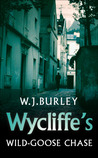
Wycliffe's Wild-Goose ChaseWycliffe's Wild-Goose Chase by W.J. Burley
My rating: 4 of 5 stars

While randomly buying books there always remains a risk of paying for a book, which is not worth the money spent. But then there is always a chance of stumbling upon a book or a series which turns out to be generally unknown but very enjoyable, making every penny spent worth it. This book fell into the latter category. I had never heard of either the series or W.J. Burley, but what I read would easily fall into the sphere of a well plotted British gentleman police procedural.

Aptly named, the book starts when Wycliffe stumbles upon a revolver while taking his morning walk. Following this discovery he discovers that the gun is a part of a burglary which took place earlier, the loot consisting mostly of antiques. Within a few days of this discovery, the local antique dealer turns up dead while his brother and his yacht goes missing. Wycliffe, not sure whether the gun is connected with the crime, or whether at all the death is a murder, or was it a suicide, starts his investigation involving the crime and burglaries of antiques.

The book is slow. But it has its own charm. Somehow I felt had it been blisteringly fast paced, the plot, the ambience of the book couldn’t have been justified. This was a classic British whodunnit, which required clues, detection and a sedate pace which would maintain its charm of being an easy and interesting work of crime writing without turning it into slow paced and boring.


View all my reviews