Showing posts with label British Mystery. Show all posts

Thursday, 19 February 2015

Mistress of the Art of Death (Mistress of the Art of Death, #1)Mistress of the Art of Death by Ariana Franklin
My rating: 5 of 5 stars

For me there are always two kind of successful crime novels. One that has a tight plot, a modus operandi of the protagonist which flushes out the culprit from amongst the rubble. A novel as such, might or might not have a very potent ambience attached to it. The reader might not feel connected to the setting in which the events take place. The descriptions might not be that vivid. But the fact that the novel delivers a potent plot with a strong ending makes up for these shortfalls and ultimately turns the book into a successful crime novel.

The second sort is, the one which has a strong ambience to back up a plot which is not that twisted, neither the deduction powers of the protagonist gets called upon to point out the culprit. The culprit almost flushes himself out. But, the reader almost gets carried away to the time and place where the novel is set. The writer not only presents the reader with a landscape but also shows the mentality of the people living at that time. The potency is strong enough to overcome the shortfall of the plot.

Mistress of the Art of Death by Ariana Franklin falls into the second category. Here we had a novel which managed to encompass three geographical entities into one novel. She brought into the pages of her novel, Cambridge, Salerno and the Middle East all in the setting of 1100s. She gave a short but detailed panorama of the early crusades. She then proceeded to tell us readers, how the Salerno School of Medicine allowed female practitioners in their ranks. Actually this is what I like with historical crime fiction. Even if the crime quotient gets a bit low at times, these books never cease to educate me in terms of history.

But, I expected a bit more from the plot and how it ended. Had this been a run of the mill plot where a king is threatened and the knight is called to save him, I wouldn’t have minded. But, Ms. Franklin laid down a plot which featured gory child deaths, a female coroner, old thirst for vengeance carried over from the crusades. She bought in the Jews being persecuted by the Christians, she introduced a masked devil called Rakshasa. I had expected that the end would come through shifting of clues and finally pinpointing the devil and then a showdown in the last chapters. Unfortunately that didn’t happen. But as I said earlier, the atmosphere compensated for this shortcoming.

A must read for any crime fiction lover, with a serious soft spot for this sub genre.


View all my reviews

Wednesday, 14 January 2015

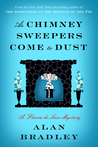
As Chimney Sweepers Come to Dust (Flavia de Luce, #7)As Chimney Sweepers Come to Dust by Alan Bradley
My rating: 4 of 5 stars

The last book had warned us readers, and this book confirmed our fears along with that of Flavia. She gets banished, to Miss. Bodycote’s Academy in Canada, to start her “training” which according to Aunt Felicity would fulfil her destiny, just like her mother. Flavia reaches Canada, accompanied by two “pills” called Dr. amd Mrs. Rainsmith. Mr. Rainsmith puts up his name in Flavia’s bad books as soon as he introduces himself,

“Dogger had once warned me to be wary of any man who introduced himself as “Mr.” It was an honorific, he said, a mark of respect to be bestowed by others, but never, ever, under any circumstances, upon oneself.”

On reaching Bodycote, Falvia gets assigned to a room called Edith Cavell. No sooner does she settles into her bed, she starts getting slapped, and then no sooner had she stopped and started the deduction process to find “why”, the assault-ress manages to bring down a body of a woman, which was hidden inside the chimney. As the head slides down the floor, the Chimney Sweepers come to dust, to clear away the puzzle regarding the dead woman, missing students and ghosts.

Flavia misses her village and her family, and Dogger. And we miss them as much as she does. But, to keep us away from our sadness we get to meet some entertaining students with nice names, a teacher suspected of homicide, a wheelchair bound mistress who keeps stuffed animals, birds and skulls in her laboratory and lastly a principal, who loves to punish her students in unimaginable ways.

Flavia transforms from a happy-go-lucky, and sometimes sad girl, into a “banished” adolescent far away from home, who realises that no letters are coming from home, except from Dogger. Who realises that the truth must be reached through facts, and only facts and that emotions should be kept at bay. And she also comes face to face with deep sadness. As such faced by a little girl who is far away from home, with no letters to look forward to, and no laboratory turn to.

“Magic doesn’t work when you’re sad.”

Flavia might have been heading towards new territory, but Alan Bradley stays rooted in his original position and presents us with a taut fast paced mystery, once a spy thriller and the next moment a gothic murder mystery, with “lights out after dark”, ghosts in the hall, and dead bodies never discovered, and if discovered, they are found stuffed inside chimneys. And he doesn’t disappoint when it comes to twists too. Not one, but two twists remain to be served in the last course.

P.S. Isn’t Dame Agatha Christie the greatest of them all?? Sometimes she looks to me like that Blues guitarist whose licks are sampled by everyone but no one gives him the credit for being a master musician. I think it’s for once and all that the tag attached to Christie, saying that she is a great plotter and a horrible writer, should be dropped. If she was a horrible writer then why would she be “sampled” hither and tither, and even if she IS a horrible writer, she still will remain the best. The Queen.
As Flavia said,
“Could I, by sheer chance, have stumbled upon one of those classic killings, such as those written about by Miss Christie, in which the murderer mocks the police by carrying out killings that mimic nursery rhymes or fairy tales?”


View all my reviews

Monday, 29 December 2014

The Laws of Murder (Charles Lenox Mysteries, #8)The Laws of Murder by Charles Finch
My rating: 3 of 5 stars

The year is 1876, and Charles Lenox is just out of the parliament with some bad men to catch. Seven baddies to be exact, all of whom has eluded justice. The book starts as he packs away the sixth, felling him to a trap which used the baddy’s greed to full potential. And thus Lenox contemplates the last. The meanest and the baddest of them all. But, he knows it is not easy to catch that guy, so he opens a detective agency, something unheard of in those days, with three colleagues. Bad press, and worse quotes from a supposed friend inside Scotland Yard follows, and the business goes off to a rocky start. The three partners start to bring cases and money except Lenox. He sits idle and contemplates his future as a case drops into his lap, involving the dropping dead of that same bad mouthing good friend within the Yard. Inspector Jenkins.

What worked for me???

1. Great humanist mind-set shown by the protagonist towards animals. The lines dedicated towards the horses of London, showed Lenox to be a man of great humanity and advanced thinking, coming from an Age, when his peers were still hanging and flogging us Indians in India. Lenox even doubts whether they will be able to hold on to India for long. An advanced yet sacrilegious though during that time.

2. Children are difficult to understand in real life, except maybe for their mothers. And they are more difficult to write about. Alan Bradley is doing a wonderful job of having a child as his sleuth, and portraying her as a well-developed character. Though not a main point in this book, Lenox draws up children pretty effectively. Georgina is a treat to read about even in those small paras dedicated to her. With proper timing she is a protagonist in the making.

3. The setting of late 1800s London. For a man who never set his foot outside India, Lenox did a commendable job of describing London from the very first page. From her rain soaked to days to the posture of her citizens which shows they are idling away their time, his descriptions were vivid.

4. Characters. Most of them were well developed. Right from the partner, to the competitor and the culprit, everyone was shown in multi-dimensional ways, which justified their acts. It never felt that “OK, we don’t know about this guy and his life or his character, but we just know that he is the culprit”.

5. Twists. The book was a crime novel, and so by default required twists. And Lenox provides them in abundance. From baddies to holy men and women, everyone was made to go through his twist machine.

What didn’t work for me?

1. The length of the novel could have been shorter. Somehow the length was a bit of a dampener for me. The plot on its own would have been tight and more enjoyable had the book been 50 odd pages shorter.


View all my reviews

Wednesday, 17 December 2014

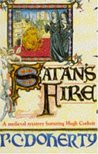
Satan's Fire (Hugh Corbett, #9)Satan's Fire by Paul Doherty
My rating: 3 of 5 stars

Satan’s Fire written by Paul C. Doherty and featuring Sir Hugh Corbett, a clerk in the court of Edward I of England starts when the King visits York to meet the French envoy, to discuss the terms of marriage between the King’s son and the daughter of the King of France, Phillip III. No sooner had he reached York, than there was an attack on his life, which ultimately is revealed to be a threat from the Old Man of the Mountain and the Assassins. He asks Sir Hugh to investigate the threats as he is convinced the Knight Templars are involved in a conspiracy against him. Sir Hugh himself receives a threat from the same source as he starts to dig for the truth with the added responsibility of finding out a counterfeit who is using Gold to make and circulate coins without the King’s permission.

If compared to the Matthew Shardlake novels of C.J. Sansom, (though it can’t be done) some distinctive points of difference arise. One, unlike Matthew, Sir Hugh definitely remains in the good books of the King, and he himself holds a lot of power. Two, the plot was like a mystery novel with a touch of political conspiracy, which made this book an outright Crime novel, unlike Sovereign (Shardlake novel #3) which had a lot of political conspiracy and turned into a political thriller from being a mere murder mystery. And lastly, the period differs. Sir Hugh is walking when the English are fighting the Scots, the Pope still holds control over Edward I, unlike Matthew whose life saw a different type of anarchy in England, the Reform.

Personally I liked Satan’s Fire more, as I prefer a straight Mystery novel where the murder remains the main plot. The solving of the crime involves clues and twists, which this book had in abundance. And most important, and ironically this has nothing to do with crime, this book involved the Crusades which still remains one of the most favourite topic of History for me.


View all my reviews

Friday, 5 December 2014

Sovereign (Matthew Shardlake, #3)Sovereign by C.J. Sansom
My rating: 5 of 5 stars

Three things I fear when I start a book. A book which is not borrowed but bought from my own savings, a book which with these three points can spell “Yawanathon” for me and can literally throw me into financial ruin for investing in a worthless adventure. Those three points are,
1. The author’s proclamation of being a HUGE fan of P.D. James (God rest her soul in peace).
2. A book which is 660 pages long, with long paragraphs.
3. A blurb from Colin Dexter which speaks about the book’ other aspects, but doesn’t mention how good is the mystery.
And thus justifiably frightened and with an apprehensive attitude I started SOVERIEGN by C.J. Sansom, and within a first few chapters I found out that despite all the above three points being present I am starting to enjoy the book. And the book proved to be such a marvel that after a long time I broke my own rule “If a book is not finished within a week, then it’s too boring too finish..ever, so skip to the next book” and took 16 odd days to complete this marvellous piece of crime fiction which is set in the times of Henry VIII, the middle age Lothario.

This book is a revelation. How many protagonists do we come across who gets bullied, beaten and threatened by every bad guy in the town, including the King. This guy, Matthew Shardlake does. He is just a lawyer and he gets bullied and shaken by high ranking bada**, and like a normal human being he endures those insults instead of throwing caution to wind and challenging the lot, like some “fictional” protagonists with “fictional” abilities would do. When laughed and mocked at, due to his physical deformation, unlike some wise crack hero who uses wit to counter every remark, he silently suffers and at times vocally protests. He is shown to be a human, yes a clever one, but a human after all who feels sad, suffers when laughed at like most of us. Cudos to Sansom for creating such a character. And not to forget his assistant Jack Barak, a faithful companion who is outraged when his master is mocked, but gets angry when the same master questions his fiancé, but runs all over London just to save his master. Another very human character.

Lastly the plot, mashed with the historical atmosphere was something I lapped up like a hungry dog. Being a silent lover of history thrust into finance, I love to read these historical mysteries. I don’t complain if the historical part overshadows the mystery, but Sansom kept enough history, his descriptions of the reform, and King henry or the greed of Sir Richard Rich were very potent, never made it boring, and silently threw in a plot which is fast, which pits a man low in social strata against villains much higher in the pecking order, he exposes the man’s fears and the villain’s greed all within the framework of a tightly woven plot, and when the finishing pages starts arriving he unleashes twists after twists which is worthy of a standing ovation.

So, though I am sad of Dame Phyllis James death, I can never call myself a fan of her works. But, I am surely, from this day, counting myself as a fan of one of her fan, C.J. Sansom.


View all my reviews

Friday, 24 October 2014

Vanished (David Raker, #3)Vanished by Tim Weaver
My rating: 5 of 5 stars

21-22 October, 2014

5 stars

Tim Weaver is a name I had never heard before, but now that I have finished reading VANISHED its hard to make his name vanish from my mind, because he weaves great tales of crime and he writes then in a way which makes them fast and entertaining. David Raker, a London based P.I. specialising in finding missing person takes up a case where he is asked to find a missing husband.

The basic plot wasn’t anything new, but the writing style, the suspense created and the smooth flow of the plot made the reading experience something to cherish. Weaver’s creation David Raker, though a widower, is not gloomy and grumpy and has a social life. A breath of fresh air among the many and clichéd gloomy protagonists.

The plot if anything was simple, but the presentation and the ending with a twist that would go down as one of my most favourite twist, is a real pleasure. He keeps the book fast and literally turns this book into a page turner. Though this is my first Tim Weaver book, I am sure it won’t be the last one.


View all my reviews

Monday, 22 September 2014

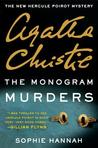
The Monogram MurdersThe Monogram Murders by Sophie Hannah
My rating: 3 of 5 stars

Re-incarnations of detectives in hands of a different author seldom succeeds, except in the case of Holmes, but that was possible maybe because the reincarnator was Sir Doyle himself. But, apart from that exception re-incarnations are meant to be not as successful as the original. The stories of limited success are limitless. Take James Bond, John Gradener or Jeffrey Deaver, the books still didn’t read like a Fleming Bond. Recently Asterix suffered the same fate. Yes, the return of our favourite heroes albeit does keep us hooked, but, at the end of the day neither those books nor The Monogram Murders left me with a satisfied smile.

First lets dissect the book purely as a crime thriller. On that point the book would score 3 or 3.5. I love twists, no doubt about that. But nothing tastes good when it is heaped upon a reader without any limit. The number of twists in this book got to me. By the end of the book they didn’t seem like twists at all. A definite case of trying too hard. The plot seemed a bit awkward. I cant put my finger on it, but somehow this was definitely not an EVIL UNDER THE SUN, not even a HICKORY DICKORY DOCK. The plot never slowed down, it was fast, but sometimes it got too fast to really comprehend what was going on. But at the end of the day, the twists of the double plot, and the solution at the end turned this book into a decent crime thriller. There were no pretensions, and though the solving of the crime was left to some circumstantial evidences, the ending was neat.

Now as far as the book goes as a Hercule Poirot novel, the book scores a big ZERO for me. I don’t know why, but this Poirot never felt like the Poirot I had read before. But it didn’t started that way, the man was getting into the Poirot shoes when suddenly the character became an impersonator instead of the real egg shaped Belgian. No, this man is definitely not the HP I knew. And somehow Catchpool, really didnt fit my idea of Hastings. I rather hoped that Hannah would bring back Hastings along with HP in this book.

Lastly, I respect Sophie Hannah. This was not an easy task. Not only did she have to churn out a twister but she also had to re-create the famous Hercule Poirot. Not every venture succeeds but a courageous move should be saluted. So, I salute Ms. Hannah for trying to bring back my favourite detective to me. Though I might not have enjoyed as much as I would have like to, I would still not lose hope. Maybe the second book, if there is any, will bring back the old Poirot I knew.


View all my reviews

Tuesday, 8 July 2014

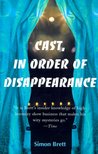
Cast, in Order of Disappearance (Charles Paris, #1)Cast, in Order of Disappearance by Simon Brett
My rating: 4 of 5 stars

Simon Brett is a prolific writers of whodunnits, with four series and more than 30 books to his credit. So, whenever I am toiling my way through an insanely slow and boring book which I decide to not to finish, I pick up one of his books, which instantly provides me with a sense of satisfaction, which I get from reading a good work of crime fiction.

Charles Paris, a mid 40s theater actor, the protagonist of this book is approached by an young girl, who wants him to be a bridge between an aging superstar and herself. She was besotted to him, even a few days back, but recently she got the boot from the old man. And now she is receiving threatening letters from the old man. So, as far as the plot goes there was nothing new to be found, but since I was not searching for anything new but something stable, I was more than happy with the pace and the line of the plot.

Like an economical medium pacer the book kept its line and length intact, and managed to survive without many down points or yawn moments. Yes, the pace was slow if compared to today’s style, but this was not a gory Scandi thriller, thereby breath-taking pace was never needed. The subtle humor, present in almost all Brett novels was very much present. But, the best part of it all was that the writer never made Paris to look like an official amateur detective. All along the plot he maintained a stance which showed clearly that he didn’t have any official authority to snoop, but did that just because somehow he got caught up in the whole mess.


View all my reviews

Tuesday, 24 June 2014

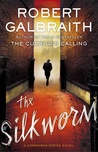
The Silkworm (Cormoran Strike, #2)The Silkworm by Robert Galbraith
My rating: 5 of 5 stars

When Val McDermid reviewed the first Robert Galbraith novel, she praised the book saying that it incorporated the best of the traditional mystery fiction and private-eye pace. The first one was good, but the second one was prone to get bogged by the 'Second Book Syndrome'. But once again proving Val McDermid’s opinion right, nothing as such happened, and the book proved to be fast and highly entertaining. Cormoran Strike, professionally busy and more famous after solving the Lula Landry case, gets a visit from a lady who wants her writer husband found. She needs him for the daily expenses, and also needs him for their daughter who is distraught without him.

The book was long. A bit too long for the kind of plot it featured, but thanks to the style of narration the process of reading it never seemed boring. Most long crime novels falls into the trap of over emphasizing the human psychology, the relations between the characters and other stuff which doesn’t help the plot a bit. Galbraith did incorporate these “human” layers in the book, like the relation between Robin and her fiancé Matthew, or the strange but enjoyable relation between her and Strike (wonder where that will go in the next book), but they never got out of hand, and came in the way of the plot. Every time I felt that maybe the conversation between the two characters is getting long enough, the writer presented me with a scene which bears a direct relation to the main plot. Page skipping was not an issue with this book. The plot, though nothing ground breaking was stable and the ending was done in a way that the crime doesn’t get solved through circumstantial evidence. The common plot and motive, and the length of the book could have made the whole thing boring, but the pace and non-deviation from the main plot turned it into a highly enjoyable piece of crime fiction. And the crime described was awesome. If the Nordic writers thought that they could be gory and brutal, then they do have a serious competitor here.

The characters were well drawn but again keeping in mind the nature of the book which is ultimately a crime novel, these developments were shown through their actions. They never made me yawn and ponder whether this book is a crime novel or a class in character development. Page long description of characters and chandeliers ala P.D. James style was never my cup of tea. The way they spoke, or the way they acted spelled out whether they are a bully or they are in awe of themselves. Even the description of the victim’s daughter was done through a series of dialogues and scenes where Strike and Robin tries to question her for clues. The description was potent enough to be heart-breaking.

The main point is, J.K. Rowling CAN WRITE. She has proved it over and over again. The Potter maniacs will vouch for that, the people who loved the process of filling up the casual vacancy would vouch for that, and now us crime fanatics would vouch for that too. So, there was never any doubt that these books featuring strike would be anything but good. Yes, I did have a sense of anxiety as to how she will handle the plotting, but with these two books she has really laid my fears to rest.


View all my reviews

Sunday, 22 June 2014

The Black Book (Inspector Rebus, #5)The Black Book by Ian Rankin
My rating: 3 of 5 stars

I had read my last Ian Rankin book a long time ago, and as far as I remember that one was a collection of short stories, which I didn’t particularly enjoy. And, if I stretch my mind even further back to the novel that I had read before that, I can hardly remember its name or what it was about. In short, Ian Rankin, though a celebrated author had never really put a solid mark on my reading life with his creations. I cant say I hate the books, but I don’t find them overtly enjoying, as was the case with THE BLACK BOOK, the fifth instalment in the John Rebus series.

The plot takes us to Edinburgh where a colleague of Rebus gets brutally assaulted outside a restaurant. Rebus takes up the cause and finds a black book belonging to the colleague which contains cryptic messages related to crimes mostly unsolved. The victim’s ex-partner suspects that the book and its contents are the reason for the assault. Rebus without the authority, takes it upon his own shoulders to find out the truth behind the book’s messages and solve some unsolved cases. Running parallel like a loop line is a case where Rebus is ordered to install surveillance on a crooked money lender and a butcher gets a visit from a stabbed relative and Rebus is given the case to solve. And like a true loop line these two lines comes and joins the main line at the very end thereby leaving no strings loose.

But, the novel didn’t match up to its blurb. The blurb suggested a high tension crime thriller with dark crimes and darker motives, but all I got was a slow moving mediocre book, which though not disappointing was never too enjoyable either. Rebus, not being my favourite protagonist, also didn’t help the cause. With his perpetual personal problems, and his issues with the senior officers the whole character gets stamped with a big label called “Cliched” and also another called “Its getting Boring”. The plot didn’t helped either. Filled with departmental politics, parallel sub plots and dangerous jumps in narrative between these plots, the book all the time felt like a chronicle of sorts from Rebus’ life, where in between all these personal issues he also managed to solve a crime. I love a book which contains a crime, detection and a solution, other side dishes in the form of personal issues and departmental politics never appealed to me.

Summing up, this book, like other Rankin novels I have read stayed true to the Rankin style, and in the process also managed to get the same response from me, which says, “Yeah, I did complete the book, but it took a lot of time, and I can’t say that I enjoyed it a lot.”


View all my reviews

Tuesday, 10 June 2014

The Body on the Beach (Fethering, #1)The Body on the Beach by Simon Brett
My rating: 3 of 5 stars

Simon Brett who won this year’s CWA Diamond Dagger for his contribution to the Crime writing genre is known for his mysteries which is surely defined as “Cozy mysteries” in todays standard, but would have been dubbed simply as “Mysteries” in the years gone by. Among his numerous series’ this one features two middle aged woman in the village of Fethering. Carole Seddon and Jude (just Jude) are neighbours. Carole being a woman with a stiff upper lip and Jude being the proverbial Happy-Go-Lucky. Carle discovers a dead body while taking her morning walk along the beach with her dog, Gulliver. As a dutiful citizen she calls up the police and reports the body, but the police arrives questions her only to inform her that they found no body on the scene. Following this event, Carole gets threatened by a woman with a gun, and another body, that of a child is discovered the next day. Carole confides in her neighbour, and together the two women starts digging within the upper-class Fethering society for the truth.

The book is almost entirely devoid of gore or bloodshed, which was pretty fine by me, as I don’t like useless gore and blood which has no need whatsoever for the plot to move further. But, what the book had in the true Golden age Crime fiction style was the pre3sence of a tight plot which propels the book forward. This being a straight forward crime novel, all reference to “psychology” and other deeper matters were not touched, which was again fine by me, and as a result we get to know very little about the characters including the protagonists, which suited the plot fine. And as it is a style of Simon Brett to keep his protagonists shrouded in somewhat mystery, this book was no different. Like Mrs Pargeter, one of his other protagonists, we hardly get to know much about Jude, not even her surname. She is shrouded in mystery but comes around as a woman who loves her life, and also brings in a sort of freshness to the somewhat boring life of her co-protagonist Carole Seddon, who unlike Jude is given a thorough background.

A definitely enjoyable read. Though a bit slow, but this book will be enjoyed by anybody who is looking for a light read between reading “HEAVY” novels.


View all my reviews

Monday, 2 June 2014

The Mermaids Singing (Tony Hill & Carol Jordan, #1)The Mermaids Singing by Val McDermid
My rating: 5 of 5 stars

I hate SERIAL KILLERs. I don’t like them. I can tolerate every kind of killers, but serial killers never sit well with me. Because when a novel is based on a serial killer and his/her antics the book develops a tendency of introducing a suspect in the last chapters and then promptly setting the clues right, and declaring that person as the culprit. Most of the serial killer novels follow this very unimaginative pattern, and most of these novels, since they involve the police, Private Investigators hardly gets the opportunity to feature in a serial killer hunt, gets crammed with uninteresting inter-departmental chatter and even more boring internal politics. Invariably the lead detective would be a broken man who would not shave and would not listen to his boss, and by a stroke of luck would uncover the criminal. I hate Serial killers and the novels which have them as antagonist.

Val McDermid with her book, THE MERMAID’s SINGING changed that, at least for once. This book had every reason for me to be a wary of it. It had long paragraphs, it had crime fighter duo of Tony Hill (male) and Carol Jordan (female) thereby running every risk of an on-the-job boring romance, and it had a serial killer. And the book was well praised, and well praised books more than often run the risk of being a let-down. The only bright side was the writer Val McDermid. She was known for her thrillers, which were extremely good, and though I had read only another book of her in an abridged version, but I had my faith in her. And she didn’t disappoint.

People with soft heart stay away from this book. This book is brutal and gory without being the obvious in-your-face kind of gory associated with the Nordic Crime fiction. Here the brutality is much more left to the imagination. Scenes are depicted where the culprit visits a museum dedicated to mediaeval torture, then the culprit kidnaps the victims, and then the mutilated bodies of the victims are discovered. The horror of the torture is left for the readers to imagine and squirm while doing so. Nothing more potent than this tact of making the reader gets the feel of the novel. And even the plot had the culprit from the very start, only in a way that the person is well concealed beneath the paperwork. And the police politics though present is mercifully short and never affects the pace of the book.

A definite must read for any crime fiction reader. This one though a bit slow is worth the every minute spent on it.


View all my reviews

Wednesday, 21 May 2014

The Dead in Their Vaulted Arches (Flavia de Luce, #6)The Dead in Their Vaulted Arches by Alan Bradley
My rating: 5 of 5 stars

“Mother,” I whispered. “It’s me—Flavia.”

And thus starts the sixth instalment of the acclaimed Flavia De Luce mysteries by Alan Bradley. As Flavia and her family awaits the return of her mother on the platform of Bishop’s Lacey, a train carrying her mother arrives. Along with the train a man comes and speaks a few words into the ears of Flavia, and then falls under the train to his death. Flavia caught in between her grief, her family and the man’s words, sets about in a dangerous and ground braking task, only to unmask the person responsible for her mother, Harriet’s death.

This is a sad, sad book. The indication was there that this might be Flavia’s last year at Buckshaw. And this turned every line of humor into sadness, as every such line made us reader realise that this is the last time the girl will say such words in Buckshaw. The mention of Gladys made me wonder how the thing will cope without Flavia, or for that matter Dogger, Mrs. Mullet and Esmeralda. But, this is also a novel of retribution, of revenge, of coming face to face with one’s destiny. Flavia gets to know why she is hated by her sisters. She comes to know how she got her Christmas wishes for new glassware, every year without hitch. She flies on Blithe Spirit just like her mother. She finds out what her father thinks about her. Most of all, she finds out who The Gamekeeper is. She finds out what her destiny has in store for us as the youngest girl of a De Luce family. This novel makes a little woman of Flavia out of the girl.

The original book deal for Mr. Bradley was a 6 book deal. So, in a way there was a sense of fear that this might be the last Flavia. But thanks to the brilliant talent of Mr. Bradley the book deal has been extended into a 10 book deal, and in a recent interview the author stated that he is well into the seventh book. The seventh book will be something every Flavia fan should and will look forward too. With different settings, and a grown up and more matured Flavia entrusted with the secrets of her family, will be a different ballgame altogether. But, whatever it may be, but keeping faith in Alan Bradley and Flavia Sabina De Luce, one can place a safe bet, that the seventh book wont disappoint, and if anything would surpass the previous six.

Though a hugely enjoyable book, but for reader who are new to Flavia De Luce series, for them I would suggest that they take up the series from the first book to get the true flavour of Flavia.


View all my reviews

Sunday, 11 May 2014

A Red Herring Without Mustard (Flavia de Luce, #3)A Red Herring Without Mustard by Alan Bradley
My rating: 5 of 5 stars

"I was the platinum. It was going to take more than a single opponent to overcome Flavia Sabina de Luce."

Every new book in this highly entertaining series by Alan Bradley brings a new wave of smile across my face. Surely this series has to be one of the best-est and the freshest of all the crime series to come out in the recent years. Flavia De Luce grows more and more adorable as the series progresses. With her amusing interests in poison, her very distraught life being hounded by two sisters and her oh-so-heartbreaking longing for her mother Harriet, makes this book much more than just a crime fiction. This almost becomes a sort redemption of the crime writing genre from the standard factory produced books featuring meaningless violence, cliched sullen heroes trying hard to be witty, and something which is given the name of a plot without having any instance of ever being one.

Compared to this Alan bradley writes books, which are a homage to the traditional British Golden Age crime novels. Are they “relevant” in today’s time? I dont know, and frankly i dont care. They are according to me a very god example of what a crime novel should look and read like. To be precise, if a crime novel doesnt have a plot, a motive and twists then no matter of “relevency to modern times” can make it a crime fiction worth mentioning.

Take the example of this book, “A Red Herring Without Mustard”. From the very begining the plot introduces a character who is hated by another character. Within a few chapters the character gets assaulted. No sooner we have gone a few pages up, than we are gifted with a murdered body. And all through the protagonist Flavia is busy trying to clear the mess created by forgery, assault, lies and murder. Except maybe a few pages where she plans her favourite pastime of revenge on her sisters, or she tries to stop the tears that comes up to her eyes when she wonders why her sisters are so mean on her. But apart from that she searches for clues, analyses clues and at the end points out the culprit. And, what makes this book a blazing success is the presence of so many characters. A crime novel with many chracaters equals to confusion which equals to twists which equals to a great crime novel.

So, everyone, who hasn’t already met Flavia De Luce, please please pick one book and go through it. Just like me you won’t be disappointed.


View all my reviews

Wednesday, 7 May 2014

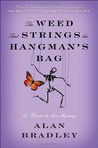
The Weed That Strings the Hangman's Bag (Flavia de Luce, #2)The Weed That Strings the Hangman's Bag by Alan Bradley
My rating: 5 of 5 stars

The second instalment of the series featuring Flavia De Luce, starts of at a zooming speed when a visiting puppeteer in the village of Bishop’s Lacey falls to his death. Flavia starts to poke where she shouldn’t, but couldn’t stay away from, and discovers that the fall is not an accident and actually the murder is linked with a suicide of a boy who died 5 years ago. Cute meets Crime meets a nostalgic feeling featuring Miss Marple in this very enjoyable whodunnit .

One of the best aspect of this series aside from that it features a adorably cute 11 year old as its protagonist, is that it brings back the Golden age feeling of crime novels where the crime took place in a village, and the suspect pool was comprised of the locals. And, most often the culprit was found among these locals. As with this book, the crime though committed on an outsider had a culprit who is a local. And, as most of the villagers were present in the narration from the very beginning the whole crime solving becomes a guessing game, where any person can come out as the culprit. I for one couldn’t really guess who the culprit was until Miss De Luce clears the cobweb and explains it all. After all as Sergeant Woolmer said to Inspector Hewitt,

“With respect, sir...it could be because we’re not Miss de Luce.”

And, lastly once again Miss Flavia De Luce. I pray to God that, Alan Bradley on a fine morning doesn’t takes up in his head to make her grow. It would just take away all the fun. Reading these books made me realise one great thing, that children are far more interesting than us boring adults. A standard crime thriller featuring a dour faced, down in the dumos police man would have just turned this book into another crime fiction. But, it was for Miss Luce that we got a series which stands out like a “HEALTHY” thumb among the sore thumbs. Where in a standard crime novel would we have got lines like,

“What did Flaubert mean,” I asked at last, “when he said that Madame Bovary gave herself up to Rodolphe?”
“He meant,” Dogger said, “that they became the greatest of friends. The very greatest of friends.”
“Ah!” I said. “Just as I thought.”


Or

“Experience has taught me that an expected answer is often better than the truth.”

Miss Flavia De Luce is one of a kind, and all credit goes to Mr. Bradley for creating such a lovely character, and not stopping at that, topping it up with plots which are strong, without much loopholes and a crime novel which is blisteringly fast, free of any unnecessary baggage and highly enjoyable to read.


View all my reviews

Tuesday, 6 May 2014

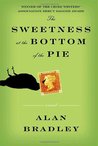
The Sweetness at the Bottom of the Pie (Flavia de Luce, #1)The Sweetness at the Bottom of the Pie by Alan Bradley
My rating: 5 of 5 stars

As someone growing up in Kolkata, I have been exposed to the Bengali brand of Detective novels from the very beginning of my reading life. These books almost always had a juvenile character, embroiled on his own or in the guise of helping an adult, in the thick of the mystery, trying to solve it. Though it was amusing at the beginning to see someone of my age fighting with culprits and solving crimes, but no sooner was I exposed to the crime writing of the west, then I started to realise what balderdash those so called “crime novels” were. And, the very thought of a policeman sharing clues with a kid was so disturbing that it almost took my mind away from the fact that those books had plots which could be easily used as a net to catch a shark. The holes were big, but not that big for a shark to escape.

So, when I found out that THE SWEETNESS AT THE BOTTOM OF THE PIE featured an eleven year old precocious girl called Flavia De Luce as its main protagonist, I had my doubts. The same old feeling of making a comedy out of a crime thriller. But, I took the plunge, and thank God I did. If finishing the book in two days flat wasn’t proof enough to show that I devoured the book, the fact that i have decided to read all the remaining books in the series one after the another must prove that I have fallen, totally and completely, in awe of Flavia De Luce and her creator Mr. Alan Bradley.

But, this is not the first time that a crime thriller with a child protagonist had garnered such rave reviews, and actually came out as a fascinating read. But those books, be it Blacklands by Belinda Bauer or Last Child by John Hart, were standalones. The heroes never got another shot at glory. Unlike here, where Flavia not only gets to solve the crime of a dead man in their house, Buckshaw’s cucumber patch and save her father, thereby rescuing two very costly and famous memorabilia, one of them belonging to King George himself, and also solve a cold case of suicide which turned out to be murder, but also gets the chance to set herself as a little Miss Marple meets Sherlock Holmes in a series of well read and well received crime novels.

Lastly, Flavia De Luce. I don’t know in reality how to live around a child as precocious as she is, but in these pages she comes out as a character who can bring a smile even to the toughest of men. Her dialogues, courtesy of Mr. Bradley, her experiments with chemistry (a la Dexter’s laboratory) and her penchant for helping her father come out of the jinx makes her one of a kind. And, also her memory of her mother, who disappeared when she was too small to remember anything. Those lines can only bring sadness in the reader’s eyes, showing behind that bubbly little sleuth there remains a little girl who misses her mom.

Poirot is dead. And, with him went away the proverbial village mysteries, to be replaced by sour faced detectives with ecclesial taste in music, Nordic policemen for whom laughing is as bad as having to lead a normal life. Poirot wont come back, but with Flavia, her sidekick Gladys and the village has definitely brought the Golden Age Mysteries back on the map of crime writing world. And this book could have well been called Sweetness ALL over the Pie!!!


View all my reviews

Thursday, 1 May 2014

Bones and Silence (Dalziel & Pascoe, #11)Bones and Silence by Reginald Hill
My rating: 5 of 5 stars

BONES AND SILENCE by Reginald Hill is the eleventh book in the series featuring Andy Dalziel and Peter Pascoe. Dalziel starts receiving letters from a woman who has decided to commit suicide, and have also decided to let know the fat man of her decision through a series of letters. Dalziel then gets an offer to play God in a local play, as he witnesses a death of a woman. He is convinced that the husband is responsible for the crime, while all evidence along with his boss thinks it’s an accident. Things come to head when a crucial witness goes missing, as Dalziel realises that the main suspect is to play Lucifer to his God in the local play.

I normally tend to get bored by the type of crime novels where 10-15 odd pages gets filled with inter departmental chit-chat, the politics of the department, how the protagonist is trying to disobey his boss, and off course, his musical taste. These 15 pages are followed by a couple of pages of material related to the main plot, and then again the reader gets face to face with another 10-15 pages of the same stuff. All in the good name of “realistic” crime fiction.

Bones and Silence being a long book, had all the possibility of having all the above mentioned “real” points. But all it had was a tight plot, which meanders through a handful of clues. An ending which is not surprising, but still throws up a few delightful twists, and the great relation between Dalziel and Pascoe, which grows tighter with each passing book. In a way this was a complete crime novel, which justified its length.


View all my reviews

Monday, 28 April 2014

The False Inspector DewThe False Inspector Dew by Peter Lovesey
My rating: 3 of 5 stars

THE FALSE INSPECTOR DEW by Peter Lovesey is a standalone novel by the author best known for his crime series featuring a Victorian policeman Sgt. Cribb and another featuring Bath CID policeman Peter Diamond. This novel is set in the year 1921, and based on the Cunard liner Mauretania, taking up the case of Dr. Crippen and his crime as a backdrop. Dr. Walter Baranov, a London dentist falls in love with a patient of his. Suffering under his dominating wife, the doctor along with his love struck patient plans to murder his wife, and escape to America aboard the Mauretania, taking up the pseudonym of Walter Dew. When a passenger is killed on board the false Inspector Dew is called upon to solve the mystery.

I can safely say, I did not enjoy the book as much as I would have liked to enjoy it. Yes there were funny moments in the book, and there was a nice little twist in the end, but somehow this book came out for me as a half hearted attempt from a writer capable of writing much funnier and twisted crime novel.

Though not at all a dull one to go through, but the book being shortlisted for the Dagger of Dagger by the CWA is a bit over the top. But, then again a lot of duller books have been awarded the best crime fiction title of the year by the CWA, and compared to those this one was a much better read.


View all my reviews

Sunday, 27 April 2014

The Tooth Tattoo (Peter Diamond, #13)The Tooth Tattoo by Peter Lovesey
My rating: 4 of 5 stars

THE TOOTH TATTOO by Peter Lovesey marks the return of Peter Diamond of Bath CID. Diamond, while recovering from a trip to Vienna and a break up in his personal life gets a dead Japanese girl on his hands. With nothing better to do, and trying to justify the expenses of the police department, he starts to investigate, only to be handed a clue. The dead girl had a tattoo on her tooth, that of a musical note. On a parallel plot, Mel Farran, a young violist is asked to join a semi retired famous quartet, as they try to revive their careers. The quartet accepts to be residents in Bath Spa University, to teach and play, as the Japanese woman is found dead. The quartet has a anomaly of their own, as their violist had disappeared earlier during a tour of Budapest, the reason for their retirement. All these loose strings come together as a compact crime novel in this highly entertaining work of crime fiction.

Lovesey has long been one of my favourite crime writers. He along with Colin Dexter and Reginald Hill wrote novels those stressed on clues and twists as the bulwark for their books. He didn’t disappoint this time either. The plot was tight; the loose strings were well stitched together in the end. And the parallel narratives also brought in the correct amount of suspense needed. The personal life of Diamond also added the amount of emotion that’s always present in most of the Lovesey books. And the subtle humor. I always enjoy a little bit of humor in my crime novels. They tend to make the reading experience better, and make the fictional policemen seem more humane. Lovesey didn’t disappoint me on that front either.

But, one of the best aspects of this book was the writer’s take on the Scandinavian crime fighters. Every chance he got, he made sure that those crime fighters gets their dues for being so morose and dark. Those lines were a treat to read. Every brood from Peter Diamond got his juniors comparing him to the Scandi guys. One going as far comparing to the Kenneth Branagh played Kurt Wallander, on the brood scale.

A thoroughly enjoyable piece of crime fiction, who shows once again that age hasn’t yet succeeded in diminishing his power of spinning a tale.


View all my reviews

Saturday, 26 April 2014

The Killings At Badger's Drift (Chief Inspector Barnaby, #1)The Killings At Badger's Drift by Caroline Graham
My rating: 4 of 5 stars

The Killings At Badger's Drift by Caroline Graham is the first instalment in the series of crime novels featuring DCI Tom Barnaby, set in the fictional village of Badger’s Drift. Emily Simpson while collecting corral root orchid, steps on to a couple making love out in the open. The sight she sees troubles her deeply. And in the next scene she dies, promptly ruled as heart attack by her doctor. Her friend, Miss Bellringer, refuses to accept. She forces the police to look into the matter. DCI Barnaby takes on the case to find himself standing face to face with a faulty ruling from the doctor, and a death that took place five years ago.

One of the blurbs had mentioned that this is a book which Agatha Christie would have been proud of. Though a bit speculative in its nature as to whether The Dame would really have been proud or not, the book did get nominated for an Agatha Award. And, it can be taken as a modern day tribute to the Dame’s style of writing. The plot is set in a village, which while appearing calm, and rather dull on the surface takes up a sinister atmosphere as lies and hatred gets revealed. Just like the villages of the Dame’s books. But, unlike Poirot, Tom Barnaby comes out as a normal human being, slightly disturbed by his wife’s cooking skills, and without any distinctive mannerisms. Another difference between the two writers would have been the motive for the crime or the act, the one to hide, which prompted the crime, would never had gotten into any of the Poirot or Marple novels. Maybe this book, published in 1987, tried to break away from rather “dull” crimes of the earlier period to provide the reader with something more risky, staying true to the format of a village crime, being solved by a local man.

This book has been hailed as one of the top 100 crime novels of all time, and it got nominated for a plethora of Awards too. For me all these accolades seem justified. This is a fast and entertaining work of crime fiction, which instead of going to the deep psychology of the human mind, stays true to the formula of twists and clever detection.


View all my reviews